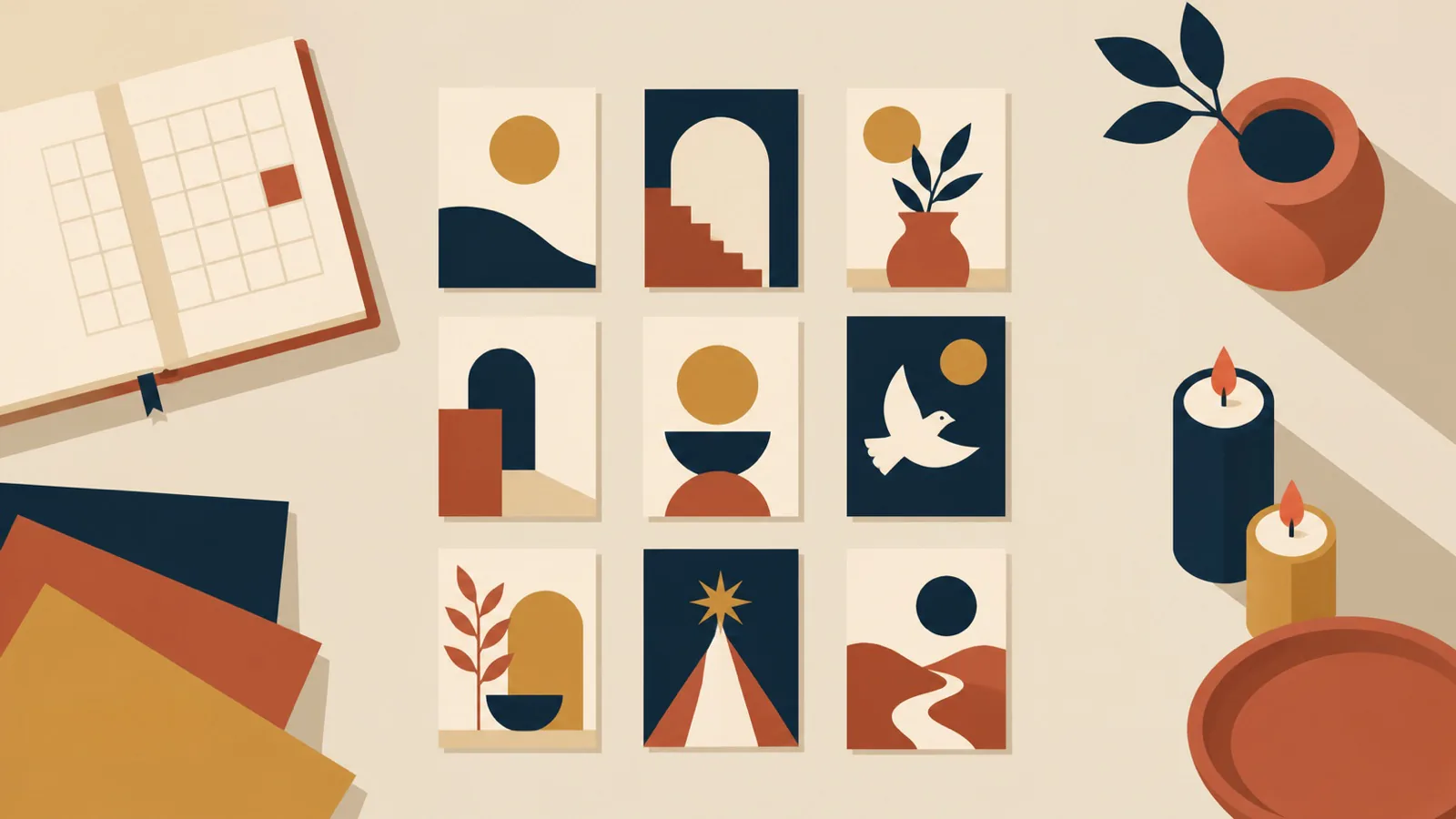
A careful novena social media design works best when it is planned as a sequence. Nine separate posts made one day at a time will usually look inconsistent, repeat the same message, and create unnecessary pressure for the person publishing them.
A novena has a built-in rhythm. People may join on the first day, return daily, save a prayer, or share one reflection with someone else. The visual system should make that rhythm clear while leaving enough room for each day's distinct focus.
The goal is not nine decorative squares. It is a usable devotional communication over nine days.
Define the daily structure first
Before designing, list what each post needs to contain. It may be a day number, the novena name, a short theme, a prayer link, the parish name, and a service time or invitation. Not every item needs equal prominence.
Choose a stable order. For example: day number first, daily theme second, then the novena title and parish signature. Keep the recurring information in the same location. A person who saw Day 3 should recognize Day 4 immediately without needing to reread the whole card.
Decide what belongs in the image and what belongs in the caption. A graphic should carry the information someone needs while scrolling: this is Day 5, this is the theme, this is the series. The full prayer, a longer reflection, links, and a list of intentions may be better in the caption, a landing page, or a PDF. Trying to fit all of it into an image makes the daily message too small to read.
Write the nine themes before visual production begins. If they are still changing, design the system around a predictable text area that can accommodate different line lengths. Do not lock a layout to one short phrase and discover on Day 7 that the approved theme does not fit.
Create one flexible visual language
The posts need shared elements: a limited palette, a stable type hierarchy, a small family of shapes or illustrations, and consistent margins. Those are what make the series feel intentional.
Avoid making every day identical. Variation can come from a different crop, a change in the accent color, an illustrated object, or a simple shift in composition. The hierarchy should remain stable even when the image changes. This gives people both recognition and a reason to notice the new day.
For a devotional series, objects and spaces often carry more than generic stock photography. A candle, a threshold, a book, a bell tower, a path, or a quiet interior can establish a setting without placing an identifiable person at the center. A set of flat, related illustrations can work across multiple formats and retain clarity at phone size.
Set the art direction once. If Day 1 is a detailed photo, Day 2 a watercolor, and Day 3 a shiny 3D icon, the project will feel improvised even if the type is consistent. A small visual vocabulary is stronger than a different style for every day.
Design for the complete publishing workflow
The work is not finished when nine image files exist. Someone must schedule or publish them, write captions, check dates, respond to comments, and share the same content elsewhere if needed.
Create a simple content sheet with the date, day number, image filename, approved caption, link, and responsible person. This prevents the common error of posting the right graphic on the wrong day. It also gives the pastor or communications lead one place to approve the complete sequence rather than reviewing each item under deadline pressure.
Prepare formats based on actual channels. A square post may be useful for an Instagram feed; a vertical version may be needed for stories; a landscape card may be useful for an email or website. Do not assume an image can simply be stretched or cropped into every placement. A system designed from the start can reuse its content and elements while protecting the reading area.
Give the publisher filenames that are hard to confuse: day-01-feed, day-01-story, and so on. Store final approved files separate from drafts. If a link is likely to change, keep it in the caption or a central page rather than embedding it in a graphic that would have to be rebuilt.
Keep the captions useful
The caption should add something the image does not. It can introduce the daily intention, provide a fuller prayer, invite attendance, or direct people to a resource. Begin with the day and theme so that people arriving from a share understand the context.
Write with enough specificity that a person can participate. “Day 6: pray for families caring for a sick relative” provides a concrete entry point. “Join us in prayer” without any reference to the day's content is too vague to hold a sequence together.
If the parish is inviting intentions, make the moderation plan clear. Say where people should submit them, who can see them, and whether the comments are being monitored. Do not accidentally turn a public social thread into a place for sensitive personal details without a plan for care and privacy.
Review the series as a whole
Place all nine posts on one page before final approval. Look for repeated images, inconsistent type sizes, themes that are too long, dates that differ, and gaps in contrast. This overview catches problems that are invisible when a single post is viewed in isolation.
The St. Genevieve novena case study is relevant because repeated devotional communications need a recognizable visual logic. The system supports the sequence; it does not compete with it.
If you are planning a novena, start with the dates, nine themes, formats, source copy, and approval contact. Use the contact form to turn those materials into a complete system before the first publishing day arrives.